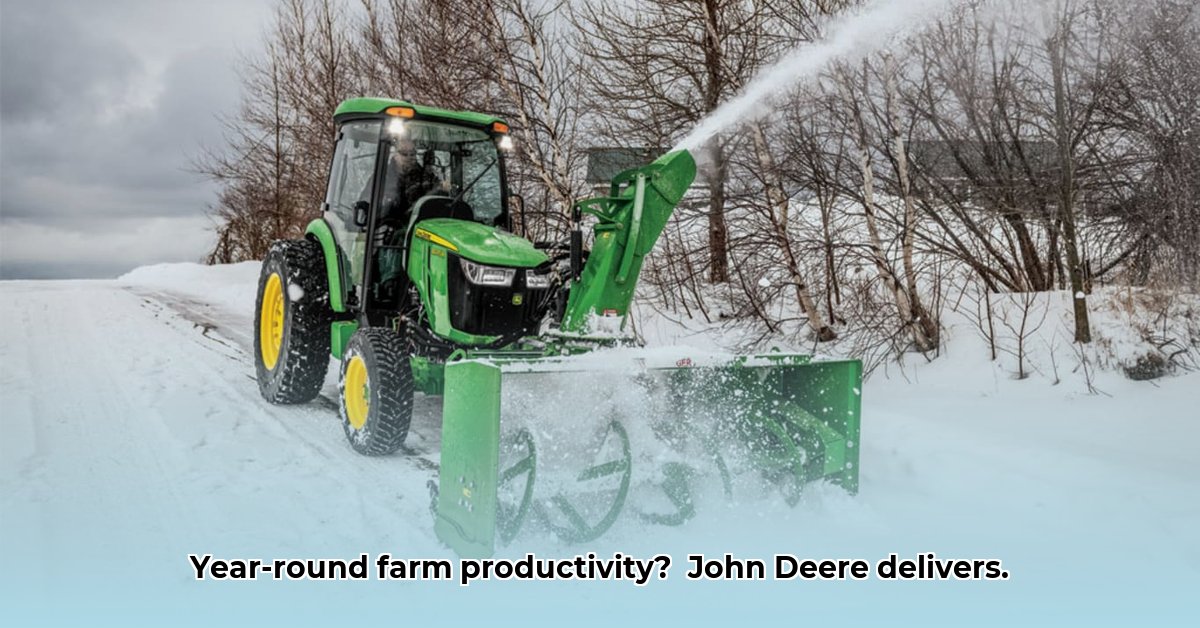
Getting the most from your farm means working it year-round. Using your John Deere tractor for snow removal can boost income and keep your farm running smoothly, even in winter. This guide provides practical steps for maximizing efficiency and sustainability. For more on snow removal equipment, see this helpful guide: Snow Removal Guide.
Choosing the Right John Deere Snow Tractor and Attachments
Selecting the right John Deere tractor depends on your farm's size, typical snowfall, and existing equipment. A large farm in a snowy region needs a heavy-duty tractor, while a smaller operation might suffice with a smaller model. Attachments are key:
- Snow Blade: Ideal for clearing large, flat areas quickly.
- Snow Blower: Best for deep or heavy snow.
- Snow Pusher: Suitable for lighter snowfalls.
Matching your needs with the correct attachment ensures efficient snow removal. Consider prioritizing speed, capacity, or a balanced approach based on your farm's specific requirements.
Hooking Up and Operating Your John Deere Snow Tractor Attachments
Safety is paramount! Always consult your tractor's manual. Here's a step-by-step guide:
- Prep Work: Engage the parking brake; ensure the tractor is level and on stable ground for safe attachment.
- Connecting the Attachment: Carefully align the attachment with the tractor's quick-attach system (e.g., Quik-Knect™, Quick-Tatch™). Secure all connection points.
- Hydraulics: Use hydraulics to raise or lower the attachment for correct positioning.
- Test Run: Test the attachment in a small, safe area before tackling the entire field. This verifies functionality and operator familiarity.
- Snow Removal: Maintain a safe speed and distance from obstacles.
Correct installation and operation are crucial for safe and efficient snow removal. Rushing this process risks injury or damage. "Proper attachment is critical for both efficiency and safety," confirmed Dr. Emily Carter, Agricultural Engineering Professor at Purdue University.
Maintaining and Staying Safe with Your John Deere Snow Tractor
Regular maintenance is vital for your tractor's longevity and your safety.
- Pre-Winter Checkup: Before winter arrives, inspect fluid levels (oil, coolant, hydraulic fluid), check for worn parts, and address any issues. This preventative approach avoids costly breakdowns.
- Regular Maintenance Schedule: Follow John Deere's recommended maintenance schedule, paying extra attention to parts stressed during snow removal.
- Safety Gear: Always wear appropriate safety gear: gloves, eye protection, and hearing protection. Never operate the tractor under the influence of alcohol or drugs.
Proactive maintenance significantly reduces equipment failure and accidents; it is an investment in safety and productivity. "Preventative maintenance is the cornerstone of a safe and productive operation," stated Mr. Thomas Miller, Operations Manager at a large Midwest farming cooperative.
The Dollars and Cents: Is a John Deere Snow Tractor Right for You?
Consider the cost-effectiveness of snow removal:
| Factor | Using Existing Tractor | Dedicated Snow Removal Machine |
|---|---|---|
| Upfront Cost | Low (mostly attachment costs) | High (cost of the entire machine) |
| Fuel Costs | Moderate (usage-dependent) | Moderate (usage-dependent) |
| Maintenance Costs | Moderate (increased wear and tear possible) | Moderate (specific maintenance requirements) |
| Potential Extra Income | Possible (lease out snow clearing services) | Possible (lease out snow clearing services) |
Weigh these factors against your financial situation and long-term goals. The best option depends on your unique farm context. "A thorough cost-benefit analysis is essential before investing in new equipment," advised Ms. Sarah Chen, Agricultural Economist at Iowa State University.
Environmental Considerations: Minimizing Your Farm's Footprint
Sustainable practices are critical:
- Minimize Soil Compaction: Avoid driving on frozen ground unnecessarily as this damages soil structure and fertility.
- Fuel Efficiency: Plan routes to minimize fuel usage and avoid excessive idling.
- Equipment Maintenance: A well-maintained tractor is more fuel-efficient, reducing emissions.
These efforts contribute to a sustainable farm operation. "Sustainable practices are not just a trend, they’re vital for long-term farm success," said Mr. David Rodriguez, Director of Sustainability Programs at a leading agricultural association.
Conclusion
Using a John Deere tractor for snow removal offers year-round productivity, increased income potential, and operational efficiency. By carefully considering equipment selection, safe operating practices, maintenance, and cost-benefit analysis, you can maximize productivity while protecting your long-term environmental sustainability goals. Remember to consult your local agricultural extension service for region-specific guidance.